Showing posts with label photographers. Show all posts

Sunday, June 23, 2013

What's in Your Camera Bag? No. 5


by Kyle White


I first fell in love with film photography last year when I first tested my father’s 1974 Canon Ftb. The photos turned out so close to what I originally envisioned that I was hooked! I’ve been testing and growing with film photography ever since.  I recently had a small shoot in downtown Salt Lake City and used the following equipment:
·         -Nikon F100 w/ 85mm f.18 lens
·         -Mamiya RZ67 w/ Polaroid Film Back
·         -Polaroid SX-70 – Sonar OneStep


The Nikon F100 has been my bread and butter ever since I decided to get a little more serious with shooting film. It’s a wonderful 35mm SLR that has simple functions that give you great control over your shots. I especially like the multiple exposures function in order to take double exposures.  One thing I don’t like about it is that the battery dies really quickly after showing “half full”. I have since got used to conserving battery by removing the battery casing after each use.  The 85mm 1.8 lens produces amazing results that have even been mistaken for medium format sometimes.  I mainly use manual focus, but it’s nice every now and then to have the autofocus function. It’s perfect for portraits.


 The Mamiya RZ67 is such an awesome and versatile tool.  I love the interchangeable back and use it to mostly shoot Fuji Polaroid film lately. It’s so fun and addictive to shoot polaroids! I highly recommend it.  The fact that everything is manual with the RZ67, helps me compose and take time to think about all facets in order to make a better shot. The only bad part about the RZ67, or “Bessie” as I call it, is how heavy it is. The weight is fine though because it makes it feel like a real art machine every time I hold it. When that shutters fires, you can really feel it.


Speaking of Polaroids, the SX-70 is a fun little machine that’s easy to take anywhere. The great thing to me about the SX-70 is that you’re able to have a little more control over things like focus and brightness when shooting Polaroid film.  Even with those extra controls though, you can’t fully predict how the Polaroid going to turn out; but then again that’s why it’s so great! The imperfections make it something that you couldn't plan on, and that what makes it beautiful. This shot was taken with expired film.


 Along with those cameras in my bag, I usually carry things like extra film, a reflector, lens pen, and a gorilla pod just in case.
No matter what cameras or equipment I use, I love that film photography is a medium that allows me to create something that feels more like a little piece of art. Thanks to everyone who has supported me in this endeavor so far. The best shots are yet to come!

 ---------------------------------------------------------------------------------------------------------------------------------
Thank you Kyle for writing this article! Give him some love,


Copy Right 2013
Analog Revival


Sunday, June 9, 2013

June 2013

Mat Marrash


"There is no right or wrong way to shoot, so long as you're having fun."

----------------------------------------------------------------------------------------------------------------------------------

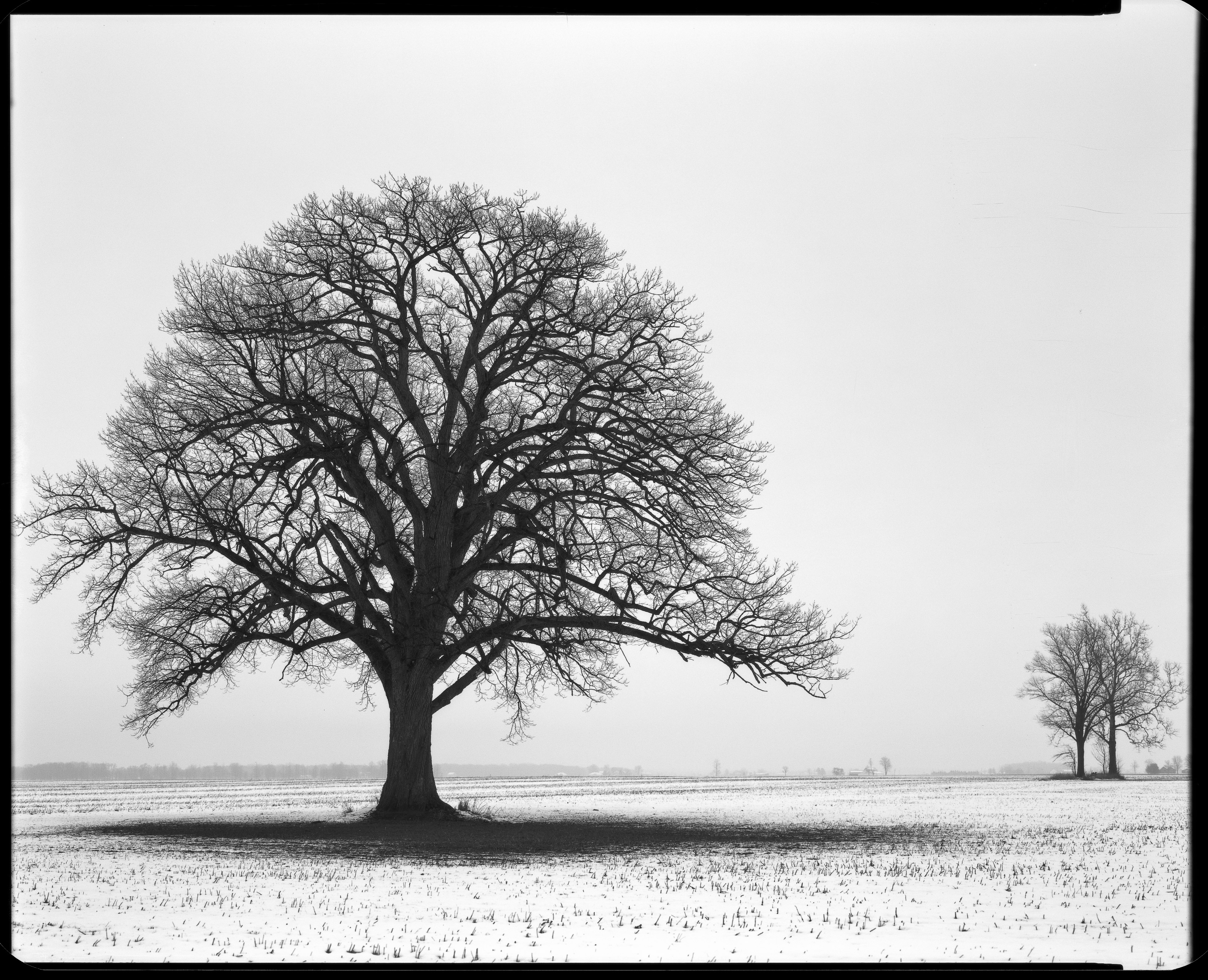
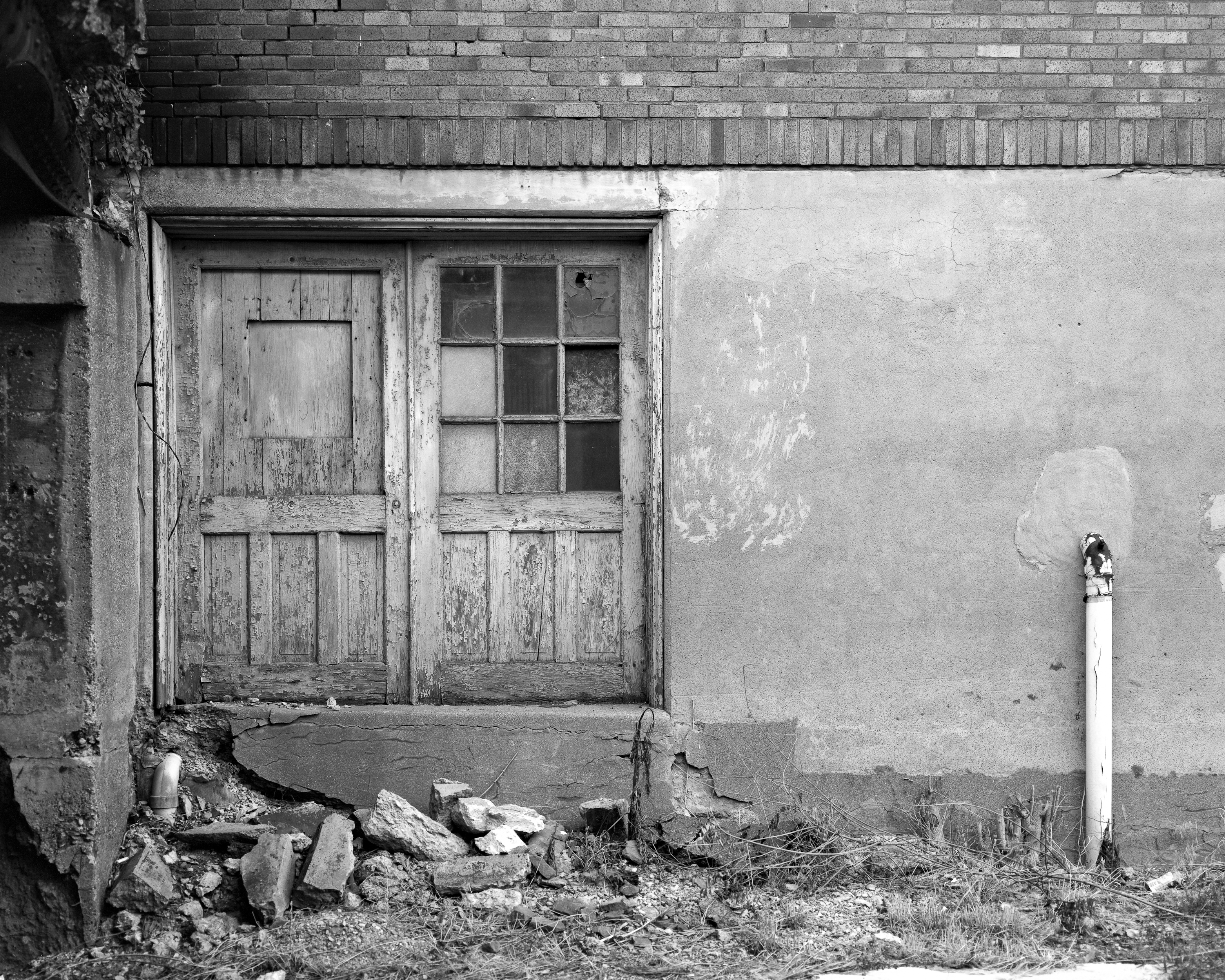
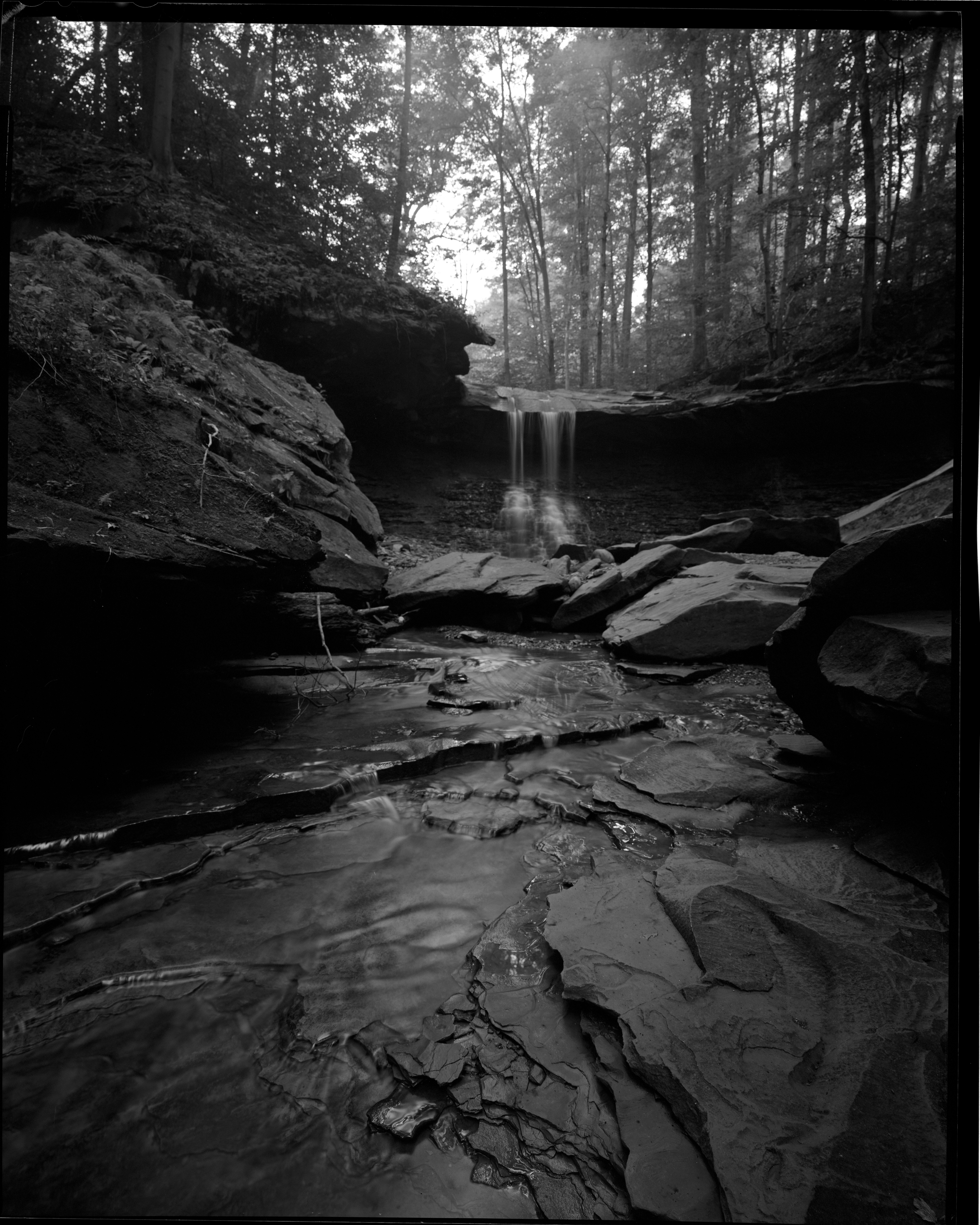
This week we talk to Large Format photographer Mat Marrash from Finley, Ohio. We found Mat among the crew of the Film Photography Project along with Michael Raso. Mat is an advocate for film photography in general, but especially Large Format Photography. Mat holds walk workshops, darkroom sessions and one on one lessons on large format photography. We think thats pretty rad! We asked Mat a few questions about film photography, here they are!

Q: How long haveyou considered yourself a photographer?
A: I pickedup my first camera with serious intent in 2008, so I'd say about five years.

Q: What was yourfirst film camera
A: AHasselblad 500C. One roll of film through that was all it took to get hooked!

Q: What did youlike and/or like about this camera?
A: I likedhow the symmetrical aspect ratio of the square changed composition, not tomention "the look" achieved from a larger piece of film and fastlenses. I also liked the mechanical simplicity of the camera, operatingcompletely free of a battery was quite liberating. Most of all, the camera issmall enough to avoid obtrusion, keeping potential subjects at ease (at leastuntil they hear the mirror "slap").

Q: Do you have afavorite brand of film?
A: Simplyput, no. I have go-to films for different "looks", but I try to stickto a film once I like it, for consistency's sake. I'm a big, BIG fan of KodakPortra 400. It's one of the best modern emulsions made, and the exposure oflatitude of this film is just silly. In B&W, HP5+ is really starting togrow on me (especially in 8x10).

Q: What are yourtop 3 locations that you’ve shot at?
A: Allthree of them are located in Japan, a place I visited on three separateoccassions in my first two years of photography. Top locations include:Itskushima/Miyajima, the Kasugayama Primeval Forest in Nara, Nara, and theEihei-ji Temple in Fukui, Fukui. Plans are underway to revist Japan with mylarge format setup, as it's the place that got me interested in photography tobegin with!

Q: Do you have anytips for people that mainly shoot digital and haven’t yet tried film?
A: There isno right or wrong way to shoot, so long as you're having fun. But if you everfeel like you're shooting too much and progressing too little, give film a try;it may surprise you!

Q: What got youinto shooting large format?
A: Istumbled upon an 8x10 camera sitting in my college professor's office, andasked him what that giant camera was and if I could shoot it. He replied"If you can get some film, I'll show you how."
Needless tosay, I had 8x10 B&W film overnighted to my door and was diving into largeformat a business day later. Had I ever seen a 4x5 between the Hasselblad andthat 8x10, I probably would have stuck to that. But once you see that big,beautiful ground glass, there's no going back! From my first days of shootingthe 8x10, I've made at least 1-2 exposures per week, and have gotten comfortablewith my gear to the point at which all motions are effortless. Knowing gearinside and out is one of the biggest hurdles new shooters need to overcome, butonce done makes the whole experience (not to mention the photos) better.

Q: What would yousay to someone that is skeptical about shooting large format?
A: It's notfor everybody, especially if you're drawn to high action and quick burst rates.Large format forces you to make decisions that a modern, automated camera mayhave been making for you: focusing, metering, composition, focal length, etc.In addition, the time required to setup each shot adds an element ofconcentration photographers with smaller cameras typically don't allowthemselves. Give it a try and see if you like it. The older you go with some ofthe photographic processes, the less they're like modern photography, and themore they're like other traditional art forms.

Q:  Who would you consider an inspiration ofyours?
A: In theworld of black and white, I'm inspired by works from: Edward Curtis, WalkerEvans, Edward Weston, George Tice, and a lesser known fellow, Art Sinsabaugh (a12x20 shooter!). For color photography, the list is long, so I’ll simplify itby saying many contemporary large format shooters.

Q: What are theadvantages of shooting film and why should more people try it?
A: Whilethe grass is always greener on the other side of the fence, film: has way moreexposure latitude, is archive safe, keeps up with changing digital formats, hasamazingly high resolution in medium format and up, forces photographers to slowdown and think about their shots, and cameras can be had incredibly cheapcompared to newer digital bodies. 

Here is a list of the equipment Mat uses on the regular...
Medium Format
Hasselblad 500C + 80mm f/2.8
FPP Plastic Filmtastic Debonair (toy camera)

Instant Photography
Polaroid Automatic Land Camera 420

Large Format
Sinar P2 8x10 + whole mess of 8x10 film holders
Schneider Super Angulon 121mm f/8
Fujinon W 210mm f/5.6
Fujnar 300mm f/4 process lens (no shutter for wet plate)
Schneider Symmar-S 360mm f/6.8

We took the liberty of picking our top ten images by Mr. Marrash, here they are!


We asked our friend Michael Raso, who is also a friend of Mat, to write a small blurb about Mr. Marrash and here it is!

"I met Mat Marrash in October of 2010 at the PDN Photo Expo in New York City. Mat was a listener of The Film Photography Podcast (FPP), which I produce and host. 


You would never know know that Mat was new to shooting film. He started shooting film just a few years ago. Within 12 months his knowledge of the medium was grater than some who have been shooting 40 years (like me)! His knowledge, enthusiasm and charm landed him a co-host spot on the FPP - a spot which he maintains til this day!


A great eye, knowledge of the technical and big heart - Mat is tops!"


- Michael Raso, producer / photographer Film Photography Podcast


Also, photos of Mat by Michael Raso


Give Mat some love on his site


----------------------------------------------------------------------------------------------------------------------------------

Buy the Blue Diana Mini by Lomography


----------------------------------------------------------------------------------------------------------------------------------

Thanks again for reading, and as always, keep shooting
#filmphotography

#filmisnotdead

Facebook

Twitter

Analog Revival is looking for Writers, Interviewers, Crafty people and Editors!
Email us at analogrevival@gmail.com if you're interested


Copyright 2013
Analog Revival


Sunday, May 26, 2013

What's in Your Camera Bag? No. 4


New banners! ^ 
We made a banner for each weekly post
----------------------------------------------------------------------------------------------------------------------------------
by Henry Gaudier-Greene


It is difficult for me to list what I carry in mybag, since I seldom carry the same things twice.  I have around 30 cameras, and what I take toa given shoot depends on where I am going, what I can carry comfortably, and whatI want to shoot.   My setup also depends on what cameras I haveloaded already. 


The first bag I use belonged to my father.  I removed the internal divisions, which allowsme to carry larger cameras more easily.


This is a pretty typical set-up for me:  Hasselblad 500c/m (with 150mm lens, 80mm lens,20mm extension tube, and a second 120 back), Polaroid 680, Polaris light meter,and a variety of film.  The Hasselblad isone of my favorite cameras, but sometimes I need a camera that gives me moreoptions.  In that case, I switch out the500 c/m for my Mamiya 645pro.


The second bag I carry is a Lowepro Slingshot.  It isn’t ideally suited for larger shootsbecause I can only carry one camera and few lenses with it.  I typically use it to hold either my NikonF100 (with 35mm, 50mm, and 85mm lenses) or my Mamiya 7.  I find it works well for shooting streetphotography.


The last camera I almost always have with me is myPolaroid 600SE.  I have two backs for it,so I can switch between film types in the middle of a shoot.  I don’t have a bag that holds it comfortably,so I usually have to carry it in some sort of tote.


----------------------------------------------------------------------------------------------------------------------------------

Big thank you to Henry for writing this article for us, and also a big thanks to you for reading! 
Check out Henry's tumblr here and give him some love.

We are currently looking for writers, editors and interviewers! 
Email analogrevival@gmail.com for details

As always, keep shooting film! 
#filmisnotdead #filmphotography

Analog Revival Sites


Flickr


Copyright 2013
Analog Revival

Thursday, May 2, 2013

FILM NEWS: Kodak to sell film business for $2.8 billion deal

Here is an article from our friends at PetaPixel about the recent news from Kodak 
---------------------------------------------------------------------------------
Kodak to Sell Its Camera Film and Imaging Businesses in $2.8 Billion Deal kodakfilm
We reported last August that Kodak was looking to sell its camera film business along with a number of other core businesses. Well, the company has now succeeded.
Kodak announced today that it has reached an agreement to sell off its two remaining imaging divisions — which includes its photographic film business — in a major deal worth $2.8 billion.

The company is handing over control of its Personal Imaging and Document Imaging divisions to the United Kingdom’s Kodak Pension Plan (KPP), which is the bankrupt firm’s largest creditor.
In addition to settling $2.8 billion in obligations with KPP, Kodak will be receiving $650 million in cash and other assets in exchange for the divisions.
Kodak to Sell Its Camera Film and Imaging Businesses in $2.8 Billion Deal kodakdev
Kodak first began selling film, chemicals, and paper in 1889
The Personal Imaging division includes over 100,000 Kodak kiosks located around the world, photographic paper, photographic film, and souvenir photo products. The Document Imaging division includes things like scanners and related software/services.
Kodak CEO Antonio Perez says that this deal will allow the company to emerge from bankruptcy as it transforms into a commercial printing company.
There’s no word yet on what the future holds for Kodak’s film and paper lines, which are still used by countless photographers around the world. The company does say that the deal will provide financial stability for the businesses that will be “beneficial to those businesses’ employees, customers and partners.” That’s a silver lining for film photographers who don’t want to see Kodak films disappear.


Read more at http://petapixel.com/2013/04/29/kodak-to-sell-its-camera-film-and-imaging-businesses-in-2-8-billion-deal/#Y4UsiO1b6DdyKyM1.99 

----------------------------------------------------------------------------------------------------------------------------------
Thank you for reading
Like us on Facebook here
Follow us on twitter here 


Copyright 2013
Analog Revival

Sunday, April 14, 2013

April 2013

Brian Finke:
"...a formal graphic simplicity that stayed with me."
------------------------------------------------------------------------------------------------------------
There are photographers who only use film when they see it fit. For example, Brain Finke, author of "2468: American Cheerleaders & Football Players" and many other collections, doesn't shoot exclusively with film, but still uses it non the less. In this interview we spoke about film in general, and two of his collections, "Construction" and "Flight Attendants". 
----------------------------------------------------------------------------------------------------------

Q: How did you get into photography?
Way back when, as a freshmen in high school I took my first photo class, yearbook/ newspaper that route and then as a senior I was taking four photo class and spending most of my day at school in the darkroom listening to Smashing Pumpkins and printing.

Q: When and how did you discover the medium of film?
It's what I grew up on, Tri-X and TMAX p3200, shooting, developing, hands on loving the process of photography.

Q: Do you have a favorite brand or format of film?
My go to film that I used for shooting my book projects and gallery exhibitions was Fuji ProH.

Q: What inspired your “Construction” and “Flight Attendants” collections?
The next project is usually what's right in front of me,  With Flight Attendants, it was when I started shooting a tone of assignment work and flying around, a lot of what I photograph is in the everyday, it's just a slightly new or different way of looking a relating to the subjects.  My way of working is very simple, I pick an idea, a very relate able subject and shoot the hell out of it.

Q: What camera and film did you use for these collections?
Hasselblad 503cw, Quantum Q flashes and Fuji ProH film printed on Kodak Endura paper

Q:Do you have any tips for people just getting into photography
Love it, promote yourself every day, and credit cards... 

Q: What are your favorite locations to shoot at?
It's whatever is next...  Recent assignments have been in Belize photographing John MCAfee at his compound on San Pedro for Wired Magazine.  This past Fall I spent a week driving along the Texas, Mexico border from Brownsville and El Paso working on my U.S. Marshals project, each day waking up at like 5am, shooting then driving 3-5 hours to the next city to do it all again the following day.  And as writing this I'm on a plane to San Francisco to shoot on the west coast, being there for 26 hours, then hooping on a red-eye back home.

Q: What experiences has your career as a photographer, allowed you to experience?
I travel a lot for personal shoots and assignments, it's always new, fresh and changing.  For many years I fought the traveling thing, cause having a family I'm ya know suppose to be there but this is just the life, I didn't necessary intend to choose but it's my life and I enjoy it.

Q: If you could go back and redo anything in your career, would you? If so what?
No regrets...  always looking forward, right...
------------------------------------------------------------------------------------------------------------

We asked Brain to list his film equipment used on a usual shoot:

Hasselblad 503cw


Quantum Q flashes with turbo batteries


Fuji ProH film printed on Kodak Endura N paper.
We chose our top ten photos from "Finke's Construction" and "Flight Attendance" series


----------------------------------------------------------------------------------------------------------
Some kind words from some rad people about Mr. Finke

“Despite my reservations, several images, among them a worker centered in a symmetric grid work of high iron, the use of space in a bisected frame portrait, and the dynamic swirl of high cirrus clouds over a worker in another bisected frame, had a formal graphic simplicity that stayed with me.”- Ed Barnas NewYorkPhotoreview.com

"Brian Finke is a prolific photographer of American culture. Brian’s commitment and ability to access popular culture icons is formidable and at times brilliant." - Todd Johnson Digital Darkroom Blog

Go give Mr. Finke some love


Also Purchase the books here

Thank you for reading! 


Copyright 2013
Analog Revival