Showing posts with label Article. Show all posts

Tuesday, July 16, 2013

ANALOG REVIVAL UPDATE

UpdateUpdateUpdate
Hello film community! Our summer schedule is full and healthy, yey! The past week has been kind of funky and we apologize for the lack of activity. We are working diligently to keep the content flowing to your lovely eyes. We have decided to drop the July interview and just continue with the regular schedule. Please send us feed back at analogrevival@gmail.com
As always, like us on our Facebook page
Follow us on Twitter
and Instagram

Copyright 2013
Analog Revival

Sunday, June 23, 2013

What's in Your Camera Bag? No. 5


by Kyle White


I first fell in love with film photography last year when I first tested my father’s 1974 Canon Ftb. The photos turned out so close to what I originally envisioned that I was hooked! I’ve been testing and growing with film photography ever since.  I recently had a small shoot in downtown Salt Lake City and used the following equipment:
·         -Nikon F100 w/ 85mm f.18 lens
·         -Mamiya RZ67 w/ Polaroid Film Back
·         -Polaroid SX-70 – Sonar OneStep


The Nikon F100 has been my bread and butter ever since I decided to get a little more serious with shooting film. It’s a wonderful 35mm SLR that has simple functions that give you great control over your shots. I especially like the multiple exposures function in order to take double exposures.  One thing I don’t like about it is that the battery dies really quickly after showing “half full”. I have since got used to conserving battery by removing the battery casing after each use.  The 85mm 1.8 lens produces amazing results that have even been mistaken for medium format sometimes.  I mainly use manual focus, but it’s nice every now and then to have the autofocus function. It’s perfect for portraits.


 The Mamiya RZ67 is such an awesome and versatile tool.  I love the interchangeable back and use it to mostly shoot Fuji Polaroid film lately. It’s so fun and addictive to shoot polaroids! I highly recommend it.  The fact that everything is manual with the RZ67, helps me compose and take time to think about all facets in order to make a better shot. The only bad part about the RZ67, or “Bessie” as I call it, is how heavy it is. The weight is fine though because it makes it feel like a real art machine every time I hold it. When that shutters fires, you can really feel it.


Speaking of Polaroids, the SX-70 is a fun little machine that’s easy to take anywhere. The great thing to me about the SX-70 is that you’re able to have a little more control over things like focus and brightness when shooting Polaroid film.  Even with those extra controls though, you can’t fully predict how the Polaroid going to turn out; but then again that’s why it’s so great! The imperfections make it something that you couldn't plan on, and that what makes it beautiful. This shot was taken with expired film.


 Along with those cameras in my bag, I usually carry things like extra film, a reflector, lens pen, and a gorilla pod just in case.
No matter what cameras or equipment I use, I love that film photography is a medium that allows me to create something that feels more like a little piece of art. Thanks to everyone who has supported me in this endeavor so far. The best shots are yet to come!

 ---------------------------------------------------------------------------------------------------------------------------------
Thank you Kyle for writing this article! Give him some love,


Copy Right 2013
Analog Revival


Sunday, June 9, 2013

June 2013

Mat Marrash


"There is no right or wrong way to shoot, so long as you're having fun."

----------------------------------------------------------------------------------------------------------------------------------

This week we talk to Large Format photographer Mat Marrash from Finley, Ohio. We found Mat among the crew of the Film Photography Project along with Michael Raso. Mat is an advocate for film photography in general, but especially Large Format Photography. Mat holds walk workshops, darkroom sessions and one on one lessons on large format photography. We think thats pretty rad! We asked Mat a few questions about film photography, here they are!

Q: How long haveyou considered yourself a photographer?
A: I pickedup my first camera with serious intent in 2008, so I'd say about five years.

Q: What was yourfirst film camera
A: AHasselblad 500C. One roll of film through that was all it took to get hooked!

Q: What did youlike and/or like about this camera?
A: I likedhow the symmetrical aspect ratio of the square changed composition, not tomention "the look" achieved from a larger piece of film and fastlenses. I also liked the mechanical simplicity of the camera, operatingcompletely free of a battery was quite liberating. Most of all, the camera issmall enough to avoid obtrusion, keeping potential subjects at ease (at leastuntil they hear the mirror "slap").

Q: Do you have afavorite brand of film?
A: Simplyput, no. I have go-to films for different "looks", but I try to stickto a film once I like it, for consistency's sake. I'm a big, BIG fan of KodakPortra 400. It's one of the best modern emulsions made, and the exposure oflatitude of this film is just silly. In B&W, HP5+ is really starting togrow on me (especially in 8x10).

Q: What are yourtop 3 locations that you’ve shot at?
A: Allthree of them are located in Japan, a place I visited on three separateoccassions in my first two years of photography. Top locations include:Itskushima/Miyajima, the Kasugayama Primeval Forest in Nara, Nara, and theEihei-ji Temple in Fukui, Fukui. Plans are underway to revist Japan with mylarge format setup, as it's the place that got me interested in photography tobegin with!

Q: Do you have anytips for people that mainly shoot digital and haven’t yet tried film?
A: There isno right or wrong way to shoot, so long as you're having fun. But if you everfeel like you're shooting too much and progressing too little, give film a try;it may surprise you!

Q: What got youinto shooting large format?
A: Istumbled upon an 8x10 camera sitting in my college professor's office, andasked him what that giant camera was and if I could shoot it. He replied"If you can get some film, I'll show you how."
Needless tosay, I had 8x10 B&W film overnighted to my door and was diving into largeformat a business day later. Had I ever seen a 4x5 between the Hasselblad andthat 8x10, I probably would have stuck to that. But once you see that big,beautiful ground glass, there's no going back! From my first days of shootingthe 8x10, I've made at least 1-2 exposures per week, and have gotten comfortablewith my gear to the point at which all motions are effortless. Knowing gearinside and out is one of the biggest hurdles new shooters need to overcome, butonce done makes the whole experience (not to mention the photos) better.

Q: What would yousay to someone that is skeptical about shooting large format?
A: It's notfor everybody, especially if you're drawn to high action and quick burst rates.Large format forces you to make decisions that a modern, automated camera mayhave been making for you: focusing, metering, composition, focal length, etc.In addition, the time required to setup each shot adds an element ofconcentration photographers with smaller cameras typically don't allowthemselves. Give it a try and see if you like it. The older you go with some ofthe photographic processes, the less they're like modern photography, and themore they're like other traditional art forms.

Q:  Who would you consider an inspiration ofyours?
A: In theworld of black and white, I'm inspired by works from: Edward Curtis, WalkerEvans, Edward Weston, George Tice, and a lesser known fellow, Art Sinsabaugh (a12x20 shooter!). For color photography, the list is long, so I’ll simplify itby saying many contemporary large format shooters.

Q: What are theadvantages of shooting film and why should more people try it?
A: Whilethe grass is always greener on the other side of the fence, film: has way moreexposure latitude, is archive safe, keeps up with changing digital formats, hasamazingly high resolution in medium format and up, forces photographers to slowdown and think about their shots, and cameras can be had incredibly cheapcompared to newer digital bodies. 

Here is a list of the equipment Mat uses on the regular...
Medium Format
Hasselblad 500C + 80mm f/2.8
FPP Plastic Filmtastic Debonair (toy camera)

Instant Photography
Polaroid Automatic Land Camera 420

Large Format
Sinar P2 8x10 + whole mess of 8x10 film holders
Schneider Super Angulon 121mm f/8
Fujinon W 210mm f/5.6
Fujnar 300mm f/4 process lens (no shutter for wet plate)
Schneider Symmar-S 360mm f/6.8

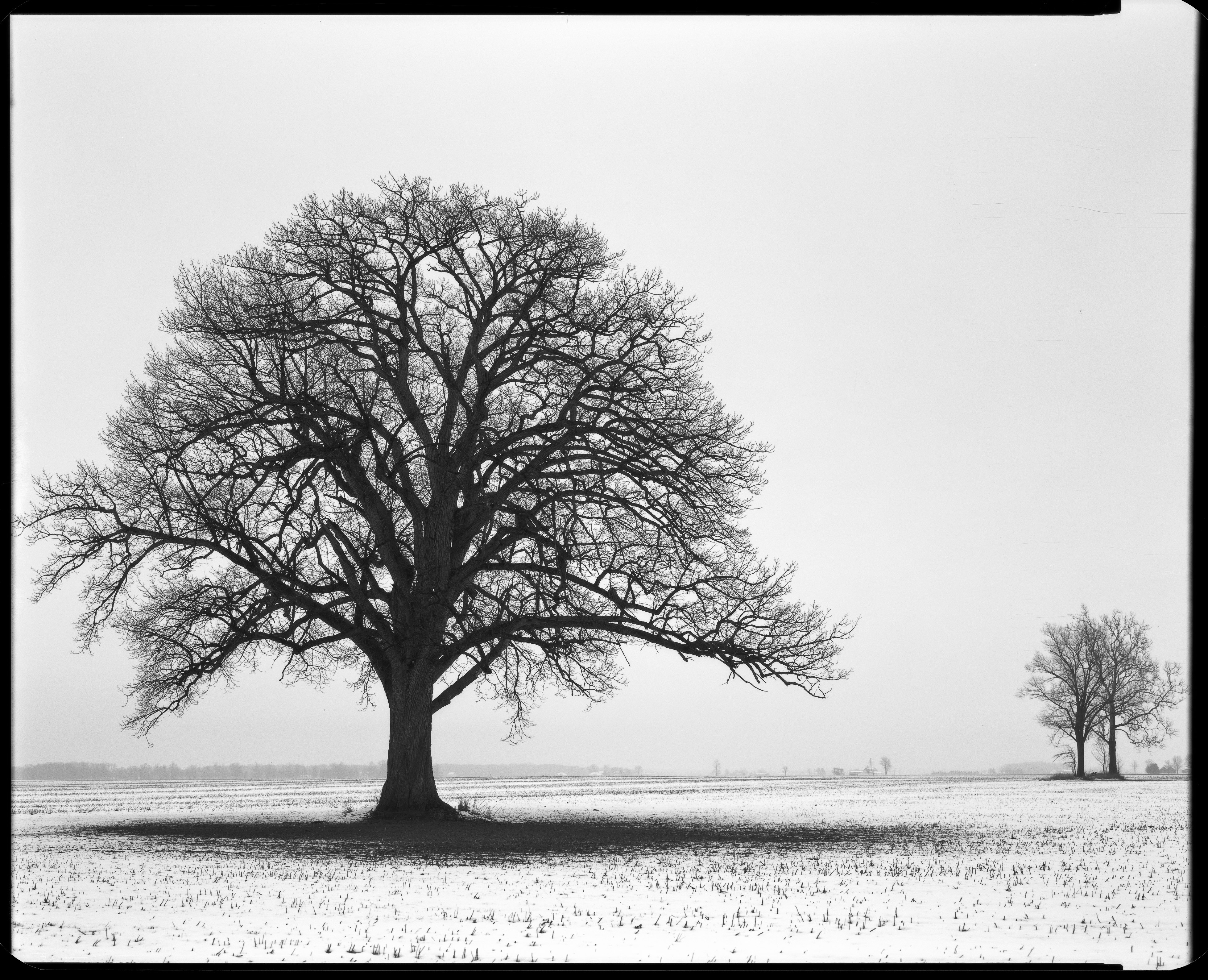
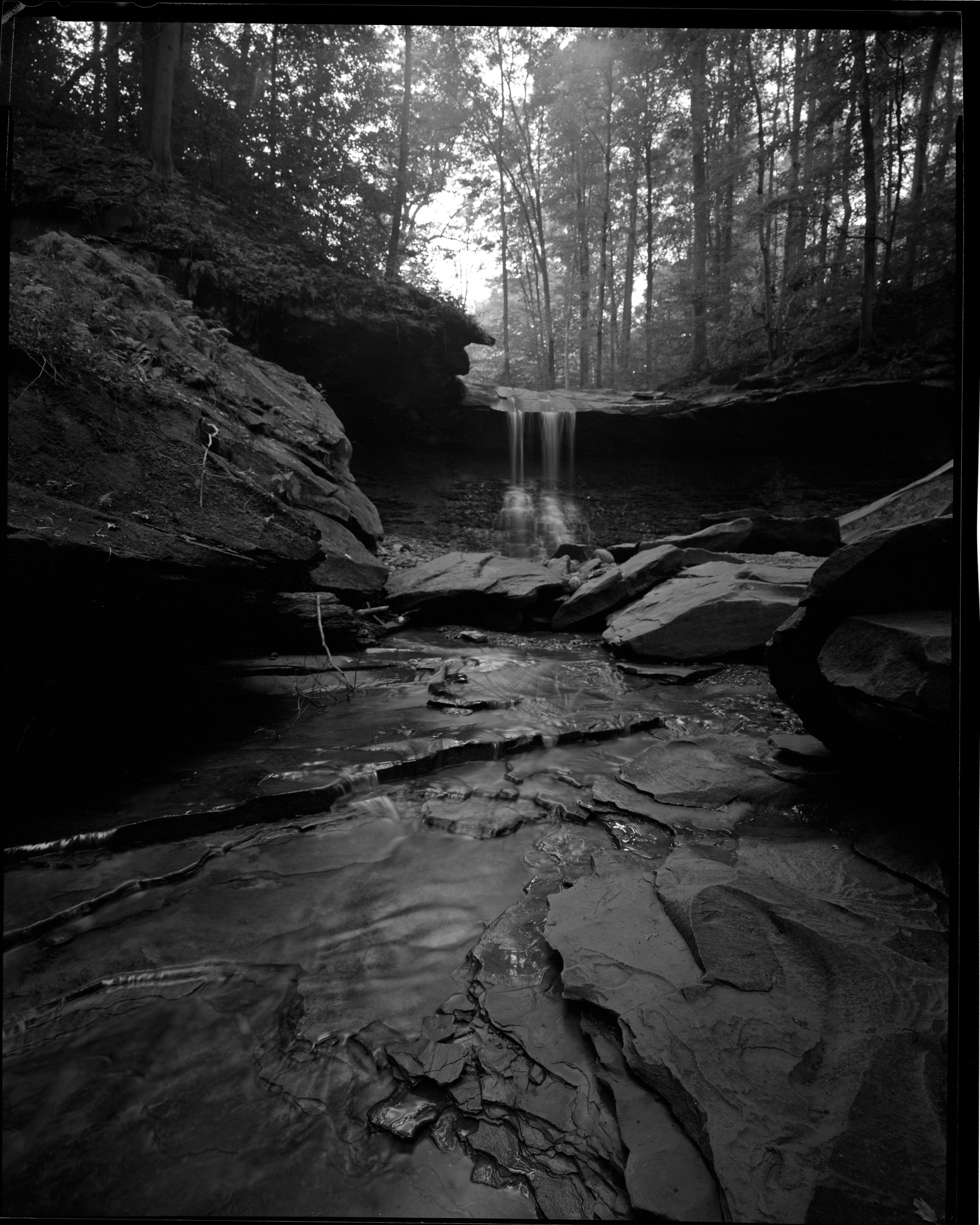
We took the liberty of picking our top ten images by Mr. Marrash, here they are!


We asked our friend Michael Raso, who is also a friend of Mat, to write a small blurb about Mr. Marrash and here it is!

"I met Mat Marrash in October of 2010 at the PDN Photo Expo in New York City. Mat was a listener of The Film Photography Podcast (FPP), which I produce and host. 


You would never know know that Mat was new to shooting film. He started shooting film just a few years ago. Within 12 months his knowledge of the medium was grater than some who have been shooting 40 years (like me)! His knowledge, enthusiasm and charm landed him a co-host spot on the FPP - a spot which he maintains til this day!


A great eye, knowledge of the technical and big heart - Mat is tops!"


- Michael Raso, producer / photographer Film Photography Podcast


Also, photos of Mat by Michael Raso


Give Mat some love on his site


----------------------------------------------------------------------------------------------------------------------------------

Buy the Blue Diana Mini by Lomography


----------------------------------------------------------------------------------------------------------------------------------

Thanks again for reading, and as always, keep shooting
#filmphotography

#filmisnotdead

Facebook

Twitter

Analog Revival is looking for Writers, Interviewers, Crafty people and Editors!
Email us at analogrevival@gmail.com if you're interested


Copyright 2013
Analog Revival


Sunday, May 26, 2013

What's in Your Camera Bag? No. 4


New banners! ^ 
We made a banner for each weekly post
----------------------------------------------------------------------------------------------------------------------------------
by Henry Gaudier-Greene


It is difficult for me to list what I carry in mybag, since I seldom carry the same things twice.  I have around 30 cameras, and what I take toa given shoot depends on where I am going, what I can carry comfortably, and whatI want to shoot.   My setup also depends on what cameras I haveloaded already. 


The first bag I use belonged to my father.  I removed the internal divisions, which allowsme to carry larger cameras more easily.


This is a pretty typical set-up for me:  Hasselblad 500c/m (with 150mm lens, 80mm lens,20mm extension tube, and a second 120 back), Polaroid 680, Polaris light meter,and a variety of film.  The Hasselblad isone of my favorite cameras, but sometimes I need a camera that gives me moreoptions.  In that case, I switch out the500 c/m for my Mamiya 645pro.


The second bag I carry is a Lowepro Slingshot.  It isn’t ideally suited for larger shootsbecause I can only carry one camera and few lenses with it.  I typically use it to hold either my NikonF100 (with 35mm, 50mm, and 85mm lenses) or my Mamiya 7.  I find it works well for shooting streetphotography.


The last camera I almost always have with me is myPolaroid 600SE.  I have two backs for it,so I can switch between film types in the middle of a shoot.  I don’t have a bag that holds it comfortably,so I usually have to carry it in some sort of tote.


----------------------------------------------------------------------------------------------------------------------------------

Big thank you to Henry for writing this article for us, and also a big thanks to you for reading! 
Check out Henry's tumblr here and give him some love.

We are currently looking for writers, editors and interviewers! 
Email analogrevival@gmail.com for details

As always, keep shooting film! 
#filmisnotdead #filmphotography

Analog Revival Sites


Flickr


Copyright 2013
Analog Revival

Thursday, May 2, 2013

FILM NEWS: Kodak to sell film business for $2.8 billion deal

Here is an article from our friends at PetaPixel about the recent news from Kodak 
---------------------------------------------------------------------------------
Kodak to Sell Its Camera Film and Imaging Businesses in $2.8 Billion Deal kodakfilm
We reported last August that Kodak was looking to sell its camera film business along with a number of other core businesses. Well, the company has now succeeded.
Kodak announced today that it has reached an agreement to sell off its two remaining imaging divisions — which includes its photographic film business — in a major deal worth $2.8 billion.

The company is handing over control of its Personal Imaging and Document Imaging divisions to the United Kingdom’s Kodak Pension Plan (KPP), which is the bankrupt firm’s largest creditor.
In addition to settling $2.8 billion in obligations with KPP, Kodak will be receiving $650 million in cash and other assets in exchange for the divisions.
Kodak to Sell Its Camera Film and Imaging Businesses in $2.8 Billion Deal kodakdev
Kodak first began selling film, chemicals, and paper in 1889
The Personal Imaging division includes over 100,000 Kodak kiosks located around the world, photographic paper, photographic film, and souvenir photo products. The Document Imaging division includes things like scanners and related software/services.
Kodak CEO Antonio Perez says that this deal will allow the company to emerge from bankruptcy as it transforms into a commercial printing company.
There’s no word yet on what the future holds for Kodak’s film and paper lines, which are still used by countless photographers around the world. The company does say that the deal will provide financial stability for the businesses that will be “beneficial to those businesses’ employees, customers and partners.” That’s a silver lining for film photographers who don’t want to see Kodak films disappear.


Read more at http://petapixel.com/2013/04/29/kodak-to-sell-its-camera-film-and-imaging-businesses-in-2-8-billion-deal/#Y4UsiO1b6DdyKyM1.99 

----------------------------------------------------------------------------------------------------------------------------------
Thank you for reading
Like us on Facebook here
Follow us on twitter here 


Copyright 2013
Analog Revival

Sunday, April 28, 2013

What's in Your Camera Bag No. 3

What's in your Camera bag?
Hello readers! This week (kind of last minute) we decided to have one of our own writers compose an article on his film equipment. Here it is!
------------------------------------------------------------------------------------------------------------------------------

Hello Analog Revival! My name is Jacob Stordahl and I am a film photographer from Minnesota. In this article I will show you what I will usually bring on a regular shoot. 

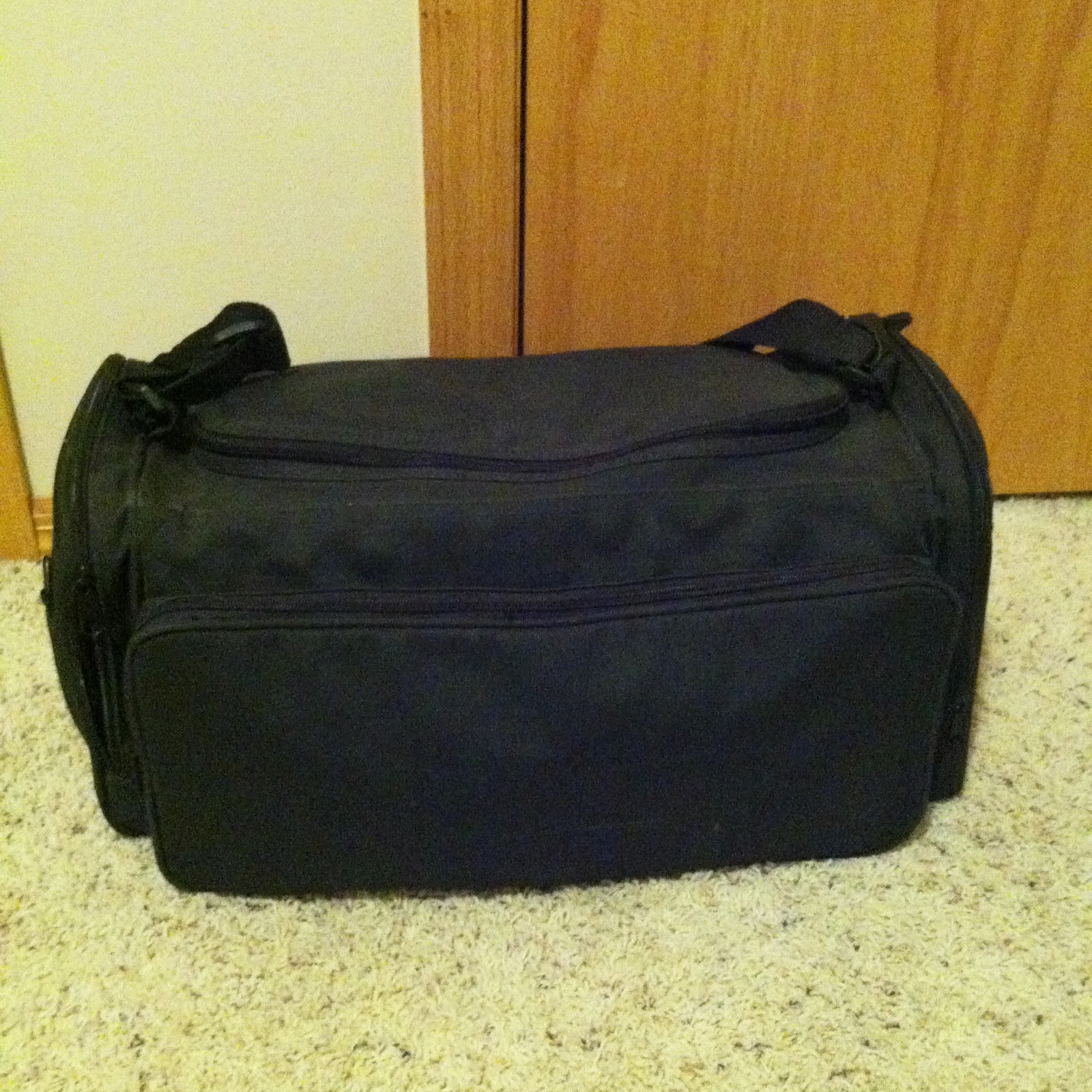
First off, my bag. I found this old bag in my garage when I was moving and it's perfect! It's an old Panasonic VHS Camcorder bag. It holds everything I need and is easy to handle. 
                                                    

Next is my film slr setup. I shoot on the Minolta Maxxum Platform with a Maxxum GT and a 5000i both sharing an AF 35-80 macro lense. The GT was my fathers and was only sold in Target Department stores. It's a nice little slr to have around and takes great images. It has minimal settings, however, for the work that I do, I'm usually in good natural light so there aren't a lot of issues. I just recently picked up the 5000i and haven't yet gotten to test it out. From what I've seen the camera looks in great condition and I'm very excited to use it. Lastly the lens. The 35-80 is a great portrait lens because it has pretty shallow depth of field. I love using this lens although most of the time I end up shooting in manual.


Up next is my Polaroid Colorpack II. I picked up this camera online and it really was a shot in the dark. If you don't know much about Polaroid Pack cameras, Polaroid stopped making the peel apart 100 type film a long time ago BUT Fujifilm still makes Color (FP-100C) and Black & White (FP-3000b or FP100B) that fits in most Polaroid pack cameras. I like bringing this camera on a shoot because it's a conversation starter and it also takes some pretty
 good images. Shooting with the black & white is easier because it has a fixed focal length of 5 ft, while the color takes some practice because you have to focus the camera your self. Also for shooting inside, you either need photography lights or flash cubes (pictured below).


Up next might be a camera you're familiar with. I found a bunch of disposable cameras at Goodwill for very cheap, I use them to take a "silly" portrait of who ever I'm shooting. This is just a way for me to keep track of when I shoot and also have a fun way to end a shoot. 


Lastly is my assortment of other things in my bag. I always have my portable reflector since I don't normally use flash. It's compact and easy to work with. I also bring my nook to portrait shoots. I have a bunch of different pose books on there that really help me out when my imagination is running dry. To keep warm I always have a hat, gloves and hand warmers in my bag. Shooting on those cold winter days can be rough without these. One other vital thing is my lens cleaning kit. This little bag has saved me many times for shooting with a dirty lens. 

_______________________________________________________________________________
Thank you for reading! We look forward to having you back next week for our next Film DIY project.
As always, keep shooting.
#filmisnotdead , #shootfilm


Copyright 2013
Analog Revival

Sunday, March 24, 2013

FILM NEWS: Fujifilm to Raise Film Prices

As of April 2013, Fujifilm will raise their prices on all photographic films. This includes Color Negative Film, Color Reversal Film, Black and White Film and Quick Snap. This is in spite of the price rise implemented in May 2012. The press release even is worded almost identically to the once posted last May. They have said the change is due to a decreasing demand for film, so here's some advice to stop that common misconception. 

Advice from A.R. :

  • SHOOT, SHOOT, SHOOT!
  • Tell EVERYONE about film, and it superiority in the photography world.
  • Start a film photography club.
  • Get friends that shoot digital to try film out.
  • Most of all, keep buying film. Not just from Fuji, but from Kodak, Lomography, Ilford, and others. 
The only way we can keep the film market alive and healthy, is feeding it. Keep buying film, and tell everyone you know, about the wonders of film. 

What's in Your Camera Bag? No. 2

What's in Your Camera Bag?

March Issue
Written by Leslie Lazenby

First a little bit about Leslie...

She wasn't quite born with a camera in her hands, but it wasn't long before she discovered the art of photography. Teaching photography and always working in the industry, she was never satisfied with the "norm" and found the many avenues of alternative photography kept her inspired. She is an avid promoter of traditional film photography with a life long love and passion for Polaroid and instant imaging. People are curious when they see her use classic cameras, and she always takes the opportunity to educate them on the joys of traditional film photography. Currently she is the owner of Imagine That and The Mecca Studio in Findlay, Ohio and can be heard occasionally on The Film Photography Project's internet radio show sharing her passions for all things related to traditional photography. 
You can view her Flickr photostream at:
http://www.flickr.com/photos/65448995@N05/sets/ 


My camera bags, yes bags are packed for each adventure or assignment, then usually stay packed with this equipment until the next event. Sometimes certain items stay in there for years.  Both bags shown are packed for adventure rather than an assignment.

Like most females I don't have just one bag, I have a few, each for different situations. So "What's in Your Camera Bag" first requires an explanation of my two camera bags and their reason for being my favorites.  My two main camera bags are a Tundra Chameleon and a 20+ year old Domke Reporter's bag. 


The Tundra is a lightweight  ballistic nylon bag called the Chameleon. It is nice and slim when minimal equipment is packed, but when needed the body unzips to expand the main section and the padded walls become customizable pockets and dividers. The front is also smartly laid out with all kinds of pockets and the back contains a large zippered document pocket. I can customize it to hold my medium format cameras or even my Leonard wide 8x10 pinhole and a few film holders.  I replaced the original shoulder strap with an Op/Tech weight reducing non-slip version. This loaded bag is currently housing top to bottom:

Polaroid SLR680  - I never go anywhere without a Polaroid Camera.

A Demekin, Pop Eyed Fisheye 110 film Camera with a roll of Lomography Orca attached. I was glad to find this little camera. I didn't know where it was; it had swam to the bottom of the bag!

Imperial Satellite 127 1960's camera with matching flash attached. This "toy" camera is so much fun to use. It  never fails to start conversations. It is loaded with Murano color negative film. Tucked in beside the Satellite is a Minolta IV exposure meter. 

Sharpie Fine Point markers - and Frog painters tape. Two very indispensable items. The frog tape is used for repairs, labeling, notes, holding 35mm film in 120 cameras and many other uses.

A chop stick for manipulation of  Polaroid photographs. Although I can manipulate with anything from a dinner fork to car keys this chop stick is my tool of choice. It has been with me for 20 years.

P-Size Cokin filters - Red, Yellow, 81B warming, circular polarizer and hidden in front of these not seen is a TIffen 62mm enhancing filter. You may notice that there are no Cokin holders in here, I never take the time to attach them, I just hold them in front of the lens, shoot and move on. I use the large P size as they not only cover the lens but the electronic eye or sensors on cameras that are not reading exposure through the lens. 

Olympus XA-4 - It's a nice compact, quick, wide angle and macro 35mm camera with an exceptional lens. 

My newest love a beautiful Fed 5b Soviet 35mm camera. 

Minolta Maxxum 7 with Minolta AF 28-85 lens and pop up flash, this or the 600si have become constant traveling companions.

Re-leathered in green snake is an OM1n with a standard 50mm Zuiko f1.8 lens. The Olympus OM camera system was my first SLR and is still a given in my camera bag. This one is loaded with Polypan F and currently has a modified back as an experiment with this film. 

Miscellaneous films Portra 400 & 800, Ilford HP4, Kodak Ektachrome, a roll of Kodak Plus-X, Impossible Silver Shade, and original Polaroid 779.

Now for the Domke. This bag in general is smaller than the Chameleon and heavier. It is all leather and ages beautifully. The contents bottom to top:

First a pair of classic Nikons, a newly gifted Nikon F with a f 1.4 lens - it is in the testing stage. I have it loaded with 400 color negative film. Keeping it company is a Nikon FM2 with a Nikkor 28-105 AF lens with a 25A red filter attached. This camera has a modified pressure plate and is loaded with original Kodak HIE high speed infrared. 

The newest addition to the bag is an Olympus OM-G with a 50 mm f1.8 Zuiko lens. This camera looks new and was being tested for a resale student camera. It did not pass all the tests, it will need some service first. It has been marked as such with aforementioned frog tape. 

Among the film in this bag are two boxes of instant film, Impossible PX-70 CP and original Polaroid SX-70, Time Zero. The latter is used for manipulations. 

Another test camera in the form of a Canon 110ED Pocket Camera - This little guy takes 110 film and was tested with Lomography Color Tiger. If it passes all tests it will be given away at a future film photography event. 

Loose film in this bag includes Kodak Portra 400, Kodak Tri-X, Polypan F, Lomography's Tiger and Peacock in 110 size. 

In the pockets are:

My original Polaroid folding Sx-70 camera, a Alpha 1, Model 2 SE. No outing is complete without a Polaroid camera. 
A roll of Frog tape and a Sharpie fine point marker, more must haves.
A chop stick for Polaroid manipulations and a flash bar.
The Rollei Prego Micron satisfies my need for a super quick, ultra wide and ultra slim camera.
Minolta flash meter V. 
A map of Gettysburg, PA.
Behind that in the white envelope is a love note from my husband.
And finally in the document pocket a folder with notes from my last visit to the Film Photography Project's studio to record podcasts. 

There you have it! The contents of my camera bags filled with fun, adventure, education and the satisfaction of film photography.


Thank you for reading, and BIG thank you to Leslie for writing this article for us. Show her some love on Flickr!

Copyright 2013 Analog Revival